The design of an industrial floor requires a methodical and precise approach to ensure optimal performance over time. The process begins with the development of the structural design, during which a bearing capacity value for the ground is established based on preliminary analyses and the geological characteristics of the site.
Plate load test
Among the most critical stages of the design process, the plate load test is a fundamental step in verifying that the actual bearing capacity of the subgrade corresponds at least to the value assumed in the design phase. This verification is essential to prevent future structural failure: if the value detected by the tests is lower than the design value, it will be necessary to proceed with further compaction of the subgrade until the required parameters are achieved.
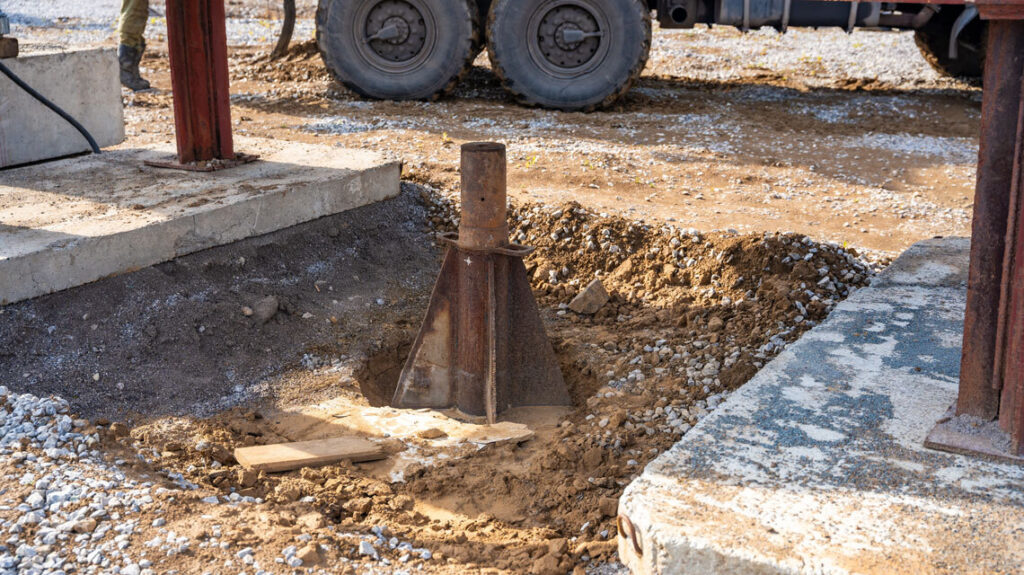
This test consists of applying a known load to the ground to determine its actual load-bearing capacity and behaviour under stress. The process begins with the strategic positioning of metal plates at the base of the test system, at specific points on the frame of the truck used as a 400-quintal counterweight, which ensures the stability necessary to take accurate measurements and represents a standardised reference for the procedure.
The operational phase involves the use of a calibrated hydraulic piston that is progressively loaded according to pre-established Newton metres. This controlled progression allows the simulation of realistic load conditions that the floor will have to withstand during its operational life, faithfully reproducing the stresses typical of industrial environments.
Subsequently, the use of a micrometer to check for subsidence of the substrate allows even the slightest deformations that could compromise the future stability of the flooring to be detected. This millimetric measurement can verify that the substrate is well compacted and ready to support the floor without subsiding over time. The data collected, compared with the initial design values, confirms the correctness of the concrete thickness, the type of reinforcement required and any ground consolidation works.
The correct execution of a plate load test requires specific expertise in geotechnics applied to industrial flooring. For this reason, relying on professionals specialised in the design of industrial floors such as Elle&P means ensuring that every stage of the process, from soil characterisation to final installation, is carried out to the highest technical and quality standards.